The Relationship between Posture, Neck Tension, and Shoulder Pain
Posture isn’t just about “standing up straight”—it’s about how your body organizes itself over time. When the head starts to drift forward (which is incredibly common with desk work and phone use), the load on the neck increases significantly. For every inch the head moves forward, the muscles in the back of the neck and upper shoulders have to work harder to hold it up. Over time, this can lead to overuse in muscles like the upper trapezius and levator scapulae, and underuse in the deeper stabilizing muscles that are meant to support the spine.
There is some solid evidence that targeted exercise can improve these patterns. A randomized clinical trial found that clinical Pilates improved posture (including forward head position), range of motion, and deep neck flexor endurance in people with chronic neck pain after just 6 weeks. This matters because those deep neck flexors are key to supporting the head without overloading the larger surface muscles.
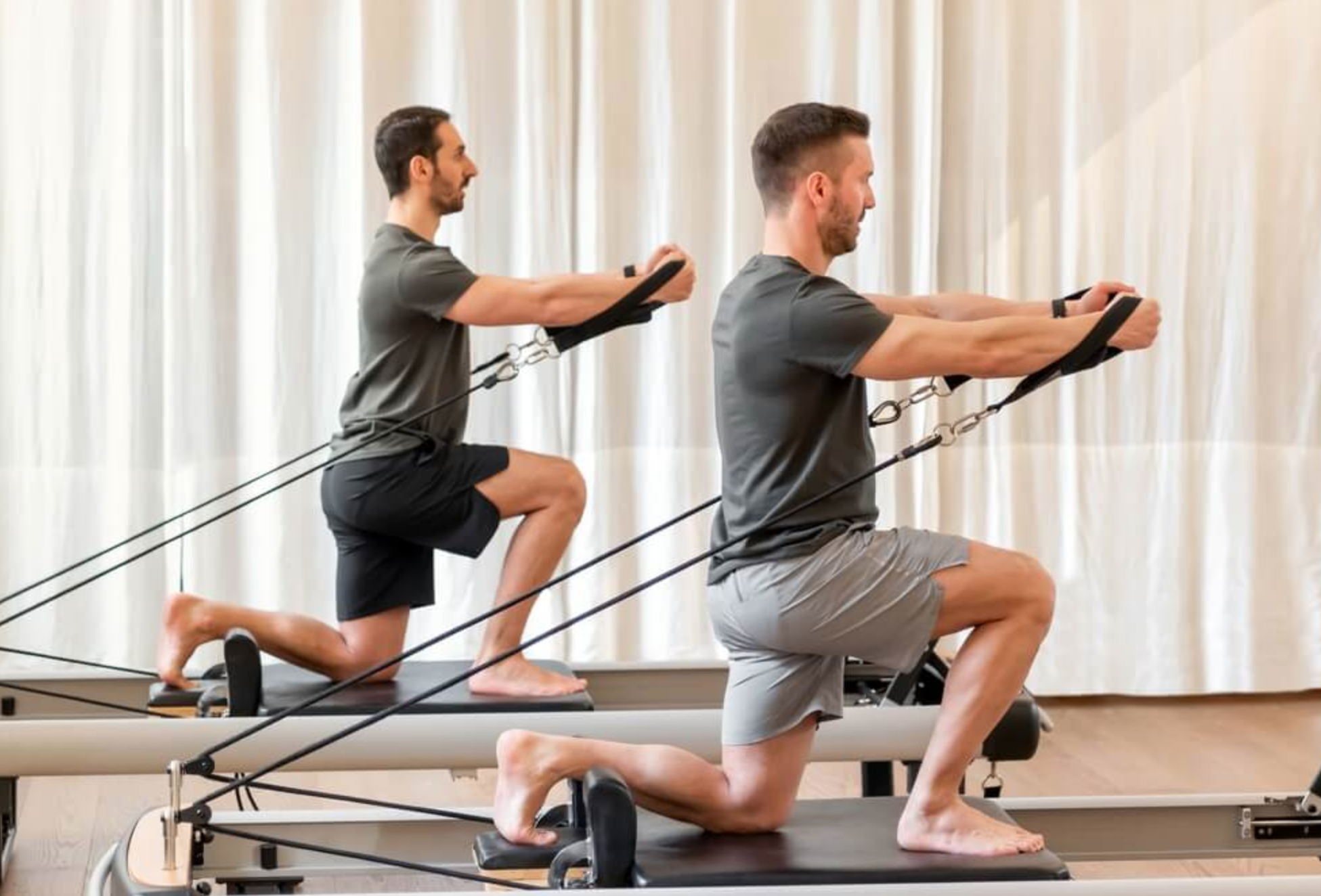
What Pilates does particularly well is bring awareness and control back to how the body stacks and moves. Instead of forcing a “good” or “better” posture, it retrains the coordination between the ribcage, spine, and shoulders—so posture becomes something your body can actually sustain via the deeper supportive muscles, not something you have to constantly think about.
Neck tension + headaches (what’s actually happening)
A lot of tension headaches don’t start in the head—they start in the neck and shoulders. Muscles like the levator scapulae (which connects your neck to your shoulder blade) can develop tight, sensitive areas that refer pain upward into the head. Research has shown that trigger points in this muscle are commonly associated with chronic tension-type headaches. That’s why rubbing your temples doesn’t always solve the problem—the source is often lower.
When these muscles are constantly working—holding your head forward, lifting your shoulders slightly, or compensating for weakness elsewhere—they don’t get a chance to rest. Over time, that constant low-level contraction can create the kind of dull, persistent headaches many people experience.
Exercise-based approaches, including Pilates, are often used in physical therapy settings for this reason. While research shows Pilates is not necessarily more effective than other exercise approaches for reducing neck pain in the short term, it is still considered a valid and helpful option for improving movement, strength, and symptoms. The key is the consistent deeper and stronger muscle building practice where the body is learning to redistribute effort so the neck isn’t doing all the work.
Shoulder issues (and how they connect to everything else)
Shoulder pain rarely exists in isolation. The shoulder is designed to be incredibly mobile, but that mobility depends on coordination with the shoulder blade (scapula), ribcage, and spine. When that coordination breaks down, (often due to posture, repetitive movement, or past injury) the shoulder joint can start to compensate. That’s when people feel pinching, weakness, or limited range of motion.
A big piece of this is how the scapula moves. If it’s not rotating, stabilizing, and gliding well along the back of the ribcage, the muscles around the neck and shoulders try to help. This is where people start to feel that familiar combination: tight neck, achy shoulders, and limited overhead movement. As noted in clinical literature, poor posture and muscle imbalance can contribute to dysfunction in muscles like the levator scapulae and surrounding shoulder structures, leading to pain and reduced function.
Pilates-based exercise is often used to address this because it emphasizes controlled movement, scapular stability, and balanced strength. People who regularly take Pilates with neck and shoulder-related pain show improvements in range of motion, posture, and muscular endurance. The goal isn’t just to “strengthen the shoulder,” but to restore how the whole system works together—so the shoulder doesn’t have to compensate anymore.